


Every student dreams of better grades, improved focus, and less stress during exams. But many fail because they don’t have a clear system for learning. A well-structured study plan is the secret to turning scattered efforts into consistent results.
Unlike random studying or last-minute cramming, a proper study plan helps you manage time, balance subjects, revise regularly, and still have enough rest. If you’ve been struggling with procrastination, lack of motivation, or poor results, this detailed guide will help you learn how to build a study plan that actually works.
In this article, we will explore why a study plan is important, the steps to create one, how to divide time, the tools that make planning easier, and tips for keeping yourself consistent. By the end, you’ll have a practical framework that will not just help in exams but also in building lifelong discipline.
Why a Study Plan Matters
A study plan is more than a timetable. It is a roadmap that aligns your academic goals with your daily actions. Without it, you may spend too much time on easy topics, neglect important subjects, or feel overwhelmed before exams.
Benefits of a Study Plan
-
Better Time Management – You learn how to distribute hours wisely among subjects.
-
Reduced Stress – No more last-minute panic because you know what to study each day.
-
Improved Focus and Retention – Small, regular study sessions help you remember better.
-
Higher Productivity – A plan eliminates guesswork and distractions.
-
Progress Tracking – You can see how much you’ve completed and what’s pending.
💡 Tip: A study plan should include breaks, sleep, and relaxation. Burnout ruins productivity.
Step 1: Identify Your Goals
Before building your study plan, set clear academic goals. Are you preparing for school exams, board exams, or competitive tests? Different goals need different strategies.
Ask yourself:
-
What are my upcoming deadlines?
-
Which subjects are my weak areas?
-
How many hours can I realistically give every day?
| Goal Type | Example | Suggested Hours |
|---|---|---|
| Short-term | Finish homework or assignments | 1–2 hours daily |
| Medium-term | Prepare for monthly tests | 3–5 hours weekly |
| Long-term | Final exams or competitive tests | 10–15 hours weekly |
💡 Pro Tip: Always tackle weak subjects first in your study plan. Difficult topics demand more time.
Step 2: Analyze and Divide Your Time
Not every hour of the day is equal. Some hours give you maximum concentration, while others are better for lighter tasks. To make your study plan work, align tasks with your natural energy levels.
| Time of Day | Best For | Notes |
|---|---|---|
| Morning | Tough subjects, theory | Brain is fresh |
| Afternoon | Assignments, practice | Moderate focus |
| Evening | Revision, light study | Keep flexible |
| Night | Quick review, flashcards | Short sessions only |
💡 Tip: Use the 50–10 formula: study 50 minutes, take a 10-minute break.
Step 3: Prioritize Subjects
Every subject doesn’t require the same effort. A strong study plan allocates time based on subject difficulty.
| Priority | Allocation | Example |
|---|---|---|
| High | 40–50% | Mathematics, Science |
| Medium | 30–35% | History, Geography |
| Low | 15–20% | Language, easy topics |
💡 Pro Tip: Study your hardest subject when your mind is most alert (usually mornings).
Step 4: Break Study Into Blocks
Instead of marathon sessions, break your day into smaller study blocks. This keeps energy high and improves memory.
| Block | Duration | Activity |
|---|---|---|
| Block 1 | 60 min | Tough subject |
| Break | 10 min | Walk/stretch |
| Block 2 | 50 min | Medium subject |
| Break | 15 min | Snack/relax |
| Block 3 | 60 min | Practice tests |
| Block 4 | 45 min | Quick revision |
💡 Tip: The Pomodoro technique (25–50 minutes focus, 5–10 minutes rest) is a proven method to boost productivity.
Step 5: Add Revision and Practice
Your study plan is incomplete without revision. Revision ensures that what you studied stays fresh in your mind.
| Frequency | Activity |
|---|---|
| Daily | Review notes for 10–15 mins |
| Weekly | Write summaries and solve practice papers |
| Monthly | Attempt full mock tests |
| Before Exams | Intensive revision sessions |
💡 Tip: Revise your weak topics multiple times instead of avoiding them.
Step 6: Track and Adjust the Plan
Even the best study plan will need adjustments. Monitor your progress and make changes whenever needed.
| Metric | How to Track |
|---|---|
| Hours studied | Use apps or planners |
| Tasks done | Daily checklist |
| Subject grasp | Practice questions |
| Energy levels | Note distractions & fatigue |
💡 Pro Tip: If one subject is taking too much time, shift it to shorter daily blocks.
Tools That Help You Stick to Your Study Plan
-
Google Calendar or Notion for planning
-
Forest or Pomofocus for focus sessions
-
Quizlet or Anki for flashcards
-
Simple alarms for break reminders
💡 Tip: Visual schedules keep you more accountable than just mental notes.
Advanced Tips for an Effective Study Plan
-
Mix reading, writing, and practicing questions.
-
Get 7–8 hours of sleep daily.
-
Use color codes for subjects in your planner.
-
Set SMART goals: Specific, Measurable, Achievable, Relevant, Time-bound.
-
Review important notes before bed and right after waking up.
FAQs About Study Plans
1. How many hours should I study daily?
On average, 4–6 hours is enough. During exam prep, 8–10 hours may be required.
2. Should I study every subject daily?
Not necessary. Rotate subjects based on priority.
3. How long should each study block be?
50–60 minutes with 10–15 minutes breaks work best.
4. Can a study plan stop procrastination?
Yes, because structured blocks eliminate confusion and help you stay accountable.
5. How often should I revise?
Daily short reviews + weekly deep study + monthly mock tests are ideal.
6. Is it okay to change my plan?
Yes. Flexibility is the key to a sustainable study plan.
Conclusion
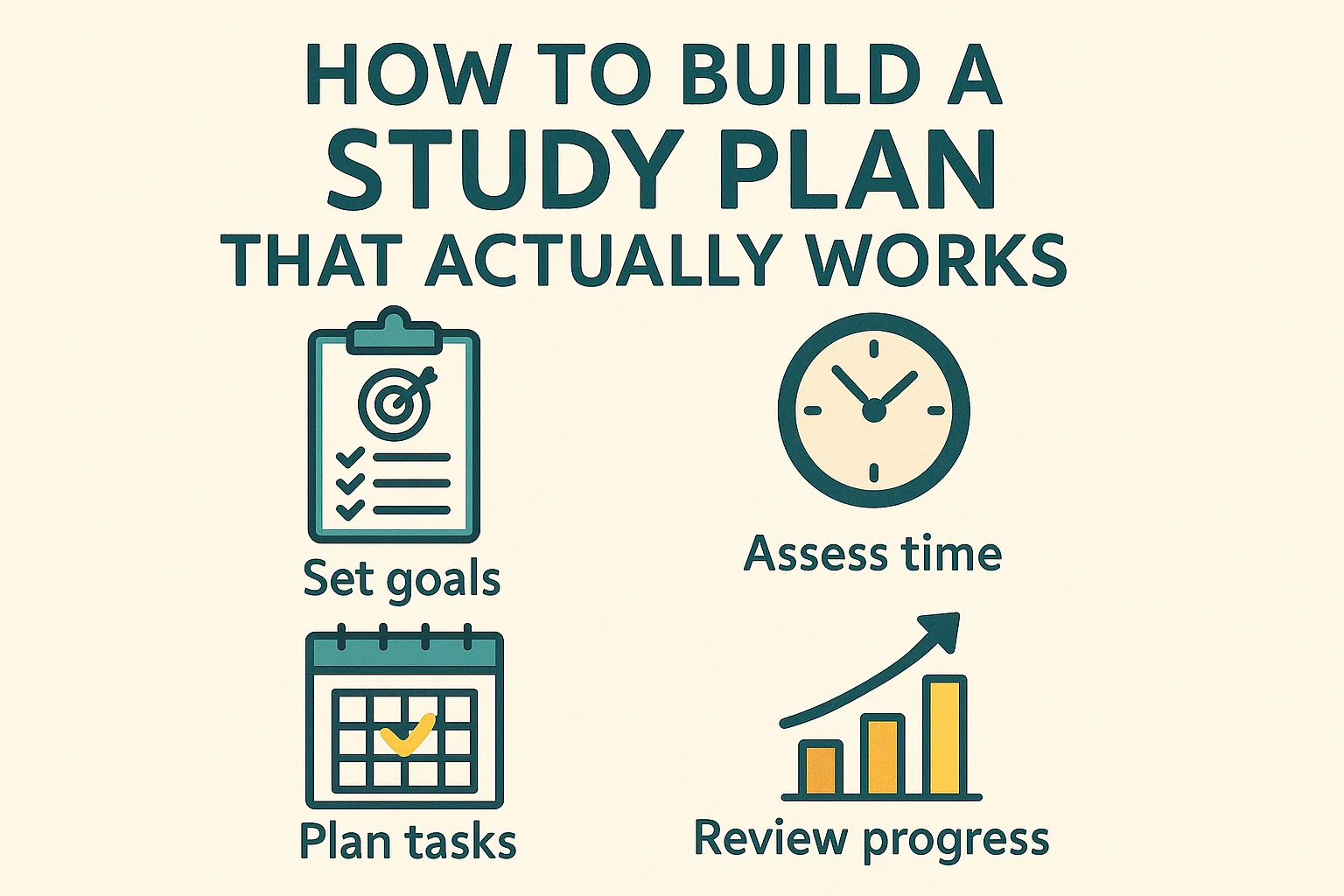
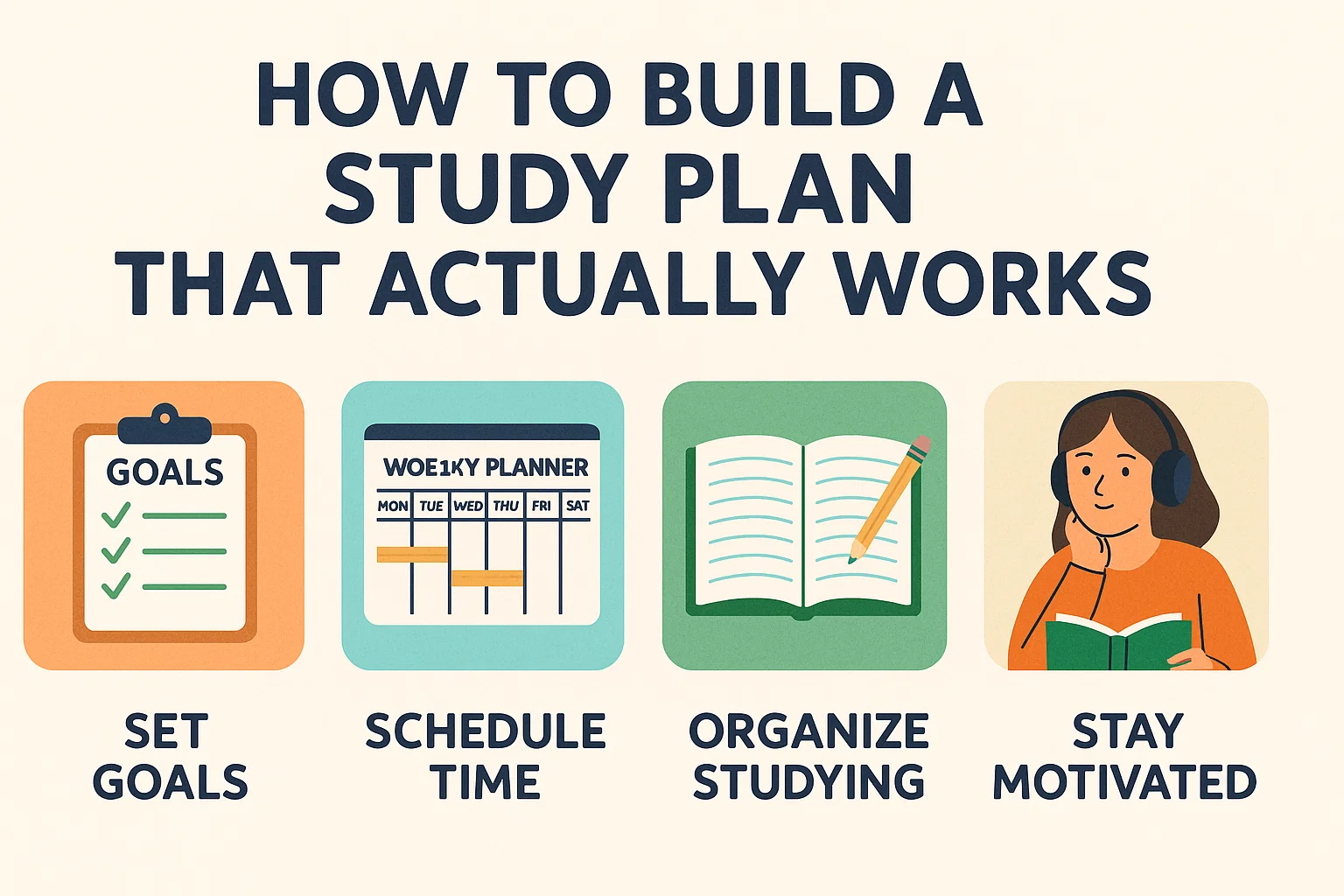
Building a study plan that actually works is about balancing time, priorities, and discipline. By setting goals, dividing your day into blocks, revising regularly, and tracking your progress, you can transform your learning process.
The secret is consistency. A well-executed study plan not only improves grades but also reduces stress, boosts confidence, and builds lifelong study habits.
So, stop guessing and start planning today—your academic success is just a good study plan away.
